
Why sound repairs come before renovation
Movement checked early
Cracks and weak masonry are stabilised before wider plans gather momentum.
Lime pointing where suitable
Breathable joint repairs can help tired walls without forcing hard modern fixes.
Renovation built on strength
Later changes last better when the building has first been made sound.
Stabilise first, renovate after
In Camborne, movement cracks, blown joints and tired finishes often show up long before the real cause has been addressed. We start with structural repairs and lime pointing where the masonry needs to be made sound, then build any wider renovation plan on that firmer base. That way the later work is not trying to hide a wall that is still moving or holding water. With Paul Clarke Restorations, the repair sequence is based on what the building needs first, not what looks quickest from the doorway.
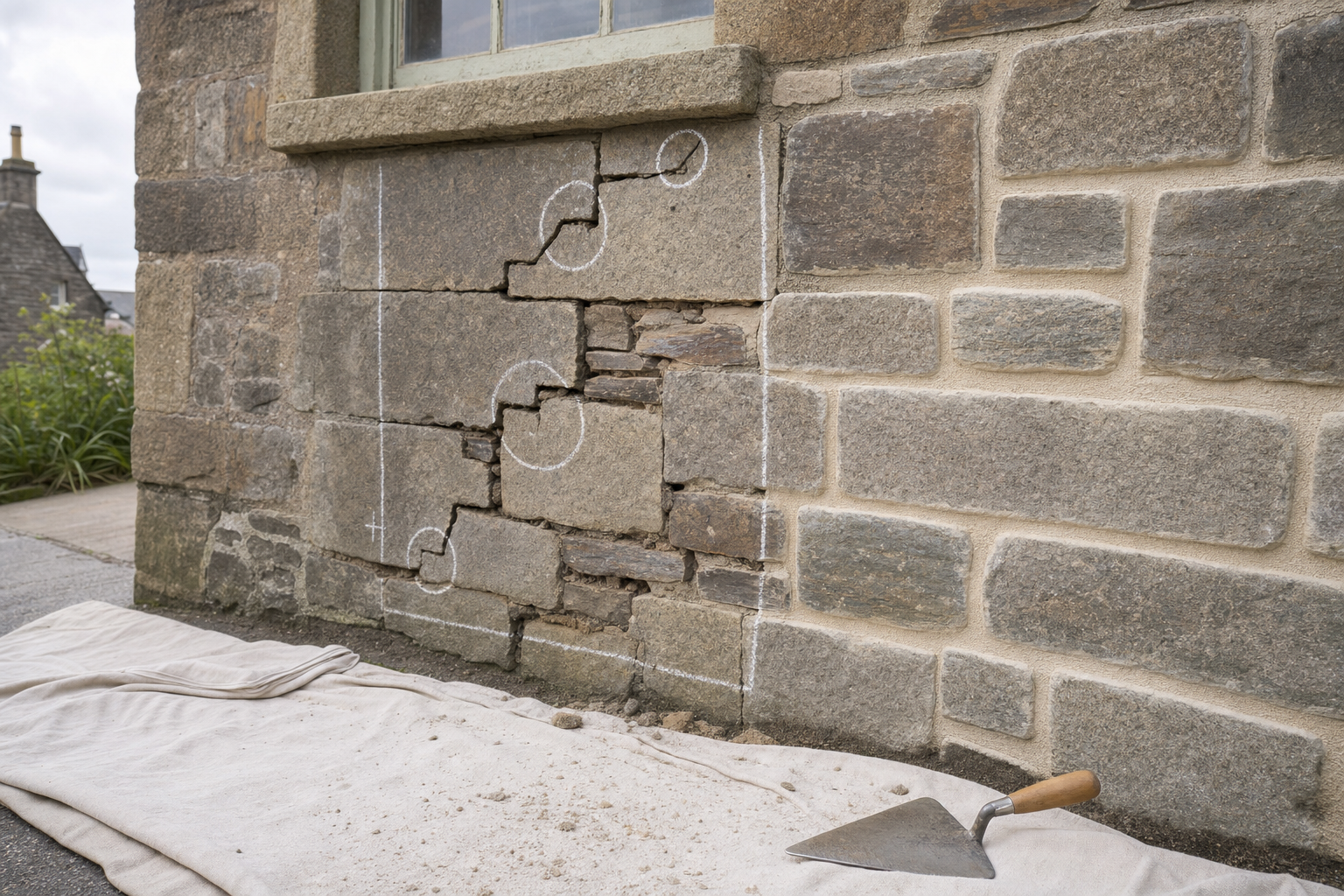

A practical order for wider building change
Some Camborne properties need local stabilisation and repointing before any bigger changes make sense. Others need the wider renovation scope mapped out early so structural work, fabric repairs and retained features do not end up arguing with each other. We define the practical order of tasks before the noisy part begins. By bringing in Paul Clarke Restorations, you can turn a tired building into a workable project one sound step at a time.
Frequently asked questions
Should cracks be stabilised before renovation starts?
Usually, yes. If the masonry is moving or weak, wider renovation work can end up hiding problems rather than solving them. Stabilisation gives later work a sound base and helps stop finished areas from cracking or failing again.
Can lime pointing be enough without wider rebuilds?
Sometimes. If the masonry is basically sound and the trouble is mainly at the joints, careful lime repointing may be enough. If movement, failed lintels or loose stone are involved, more structural work may be needed. The wall decides that, not wishful thinking.
How is a Camborne renovation sequence decided?
We start with what makes the building safe and stable, then work through structural repairs, fabric issues and the later changes that depend on them. On Camborne jobs, that usually means sound masonry first and prettier finishes after.