
What breathable plaster changes indoors
Kinder to solid walls
Breathable plaster helps moisture move out, which suits stone, cob and other older walls.
Finish matched to the room
From plain coats to traditional textures, the finish is chosen for the space and substrate.
Built up in proper coats
Successive coats do the hard work, so the surface is not asked to hide a bad base.
Breathable plaster for damp-prone old interiors
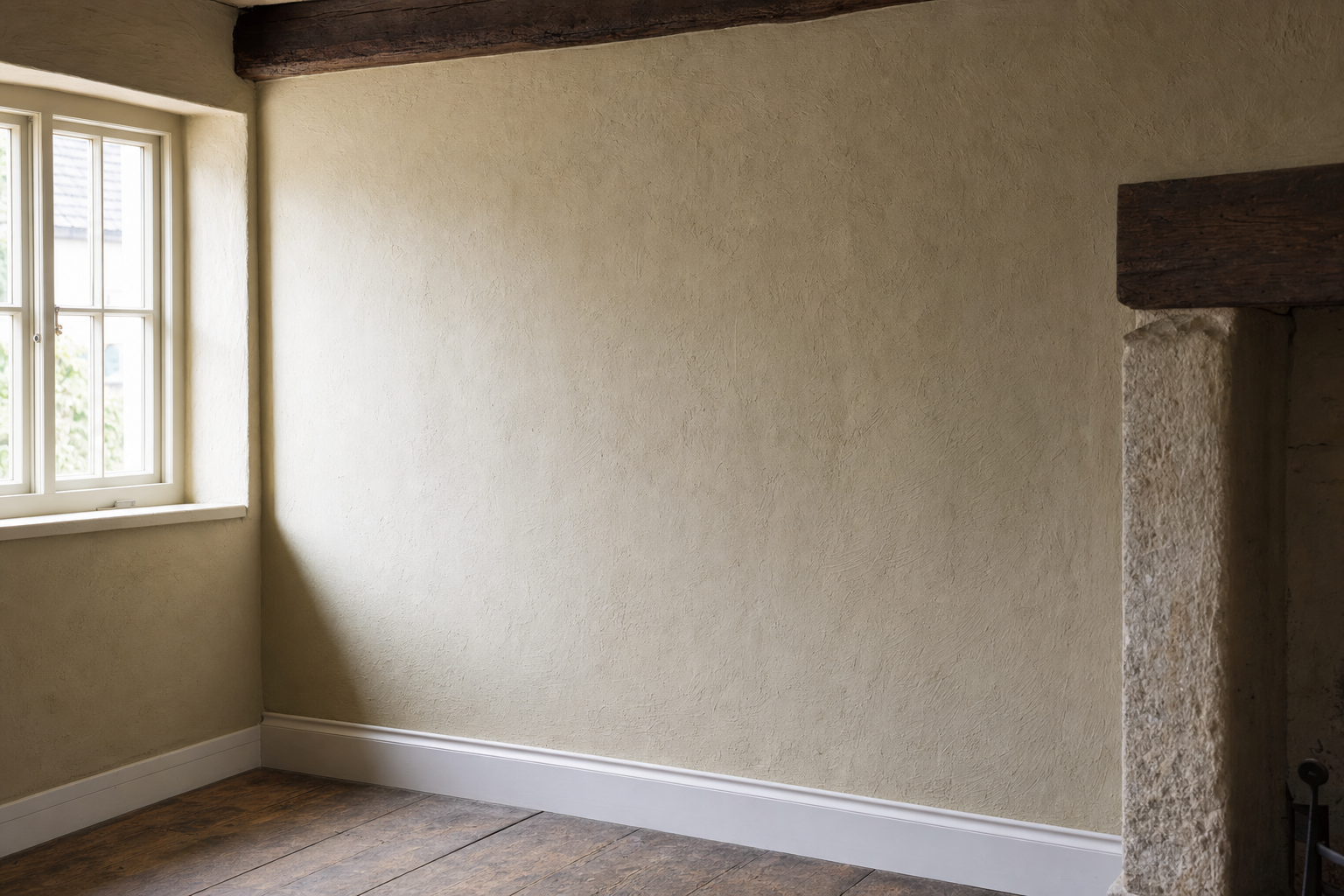
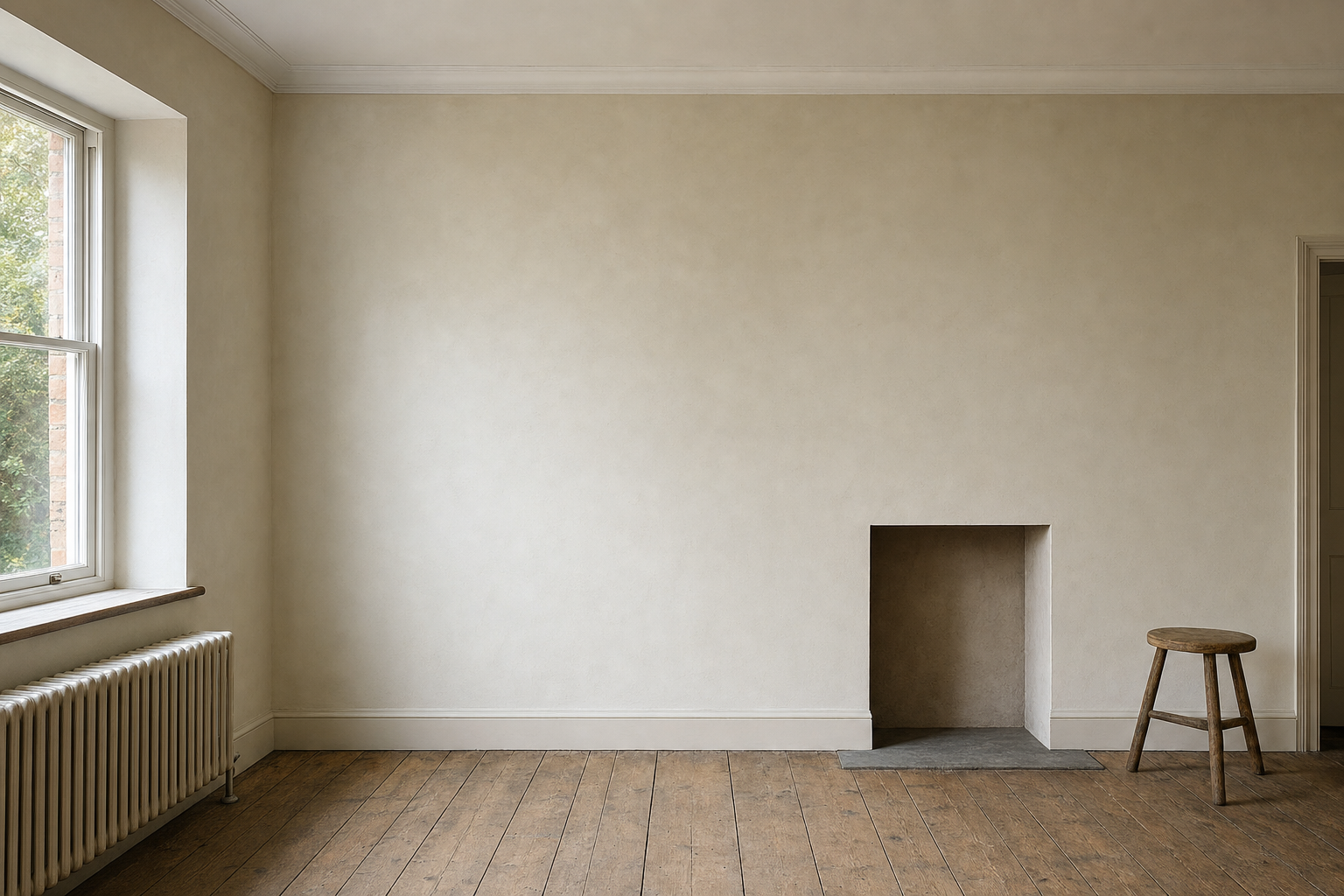
Old solid walls do not behave well behind hard modern plaster. If the finish is too dense, moisture lingers, salts show and the room never quite feels settled. We use breathable internal lime plaster for stone, cob and other traditional walls, with hand-mixed lime, hot lime, horsehair and thermal lime options where they suit the building. With Paul Clarke Restorations, the plaster is chosen to work with the wall rather than force the wall to work around the plaster.
Built in coats, not rushed onto the wall
The base needs to be right before the finish goes anywhere near it. We prepare the substrate, build the work in coats and adjust the mix to the wall's condition, suction and intended finish. Lime tanking and traditional textures can be included when the room needs them. When you choose Paul Clarke Restorations, we also plan curing time around temperature, ventilation and the season, because lime has no interest in your calendar if the wall is not ready.
Frequently asked questions
Is lime plaster better for cob and stone walls?
It often is, because those walls usually need a finish that lets moisture move through and evaporate. Dense modern plaster can hold damp and salts in the wall. Lime is more forgiving and can be adjusted in mix and finish to suit traditional surfaces and older room conditions.
Why does lime plaster take longer between coats?
Each coat needs time to firm up and carbonate properly before the next one goes on. If the build-up is rushed, the finish can craze, weaken or detach. Temperature, ventilation and the wall itself all affect timing, so we schedule the work around conditions rather than pretending every room cures the same.
Can you plaster over failed modern finishes?
Sometimes the failed finish needs removing first, especially if it is hollow, salt-loaded or trapping moisture. We inspect the background and decide whether repairs, preparation coats or a fuller strip back are needed. The goal is a sound base, because lime plaster only behaves well when the wall beneath it can do the same.