
Why lime joints matter on old walls
Moisture can escape
Breathable joints let trapped moisture leave the wall instead of pushing it deeper into soft stone.
Matched to the masonry
Mix, texture and finish are chosen for the masonry so the repair sits in, not on, the wall.
Careful removal first
Failed joints are removed carefully, so sound edges are not knocked away just to save time.
Stop failing joints from harming the stone
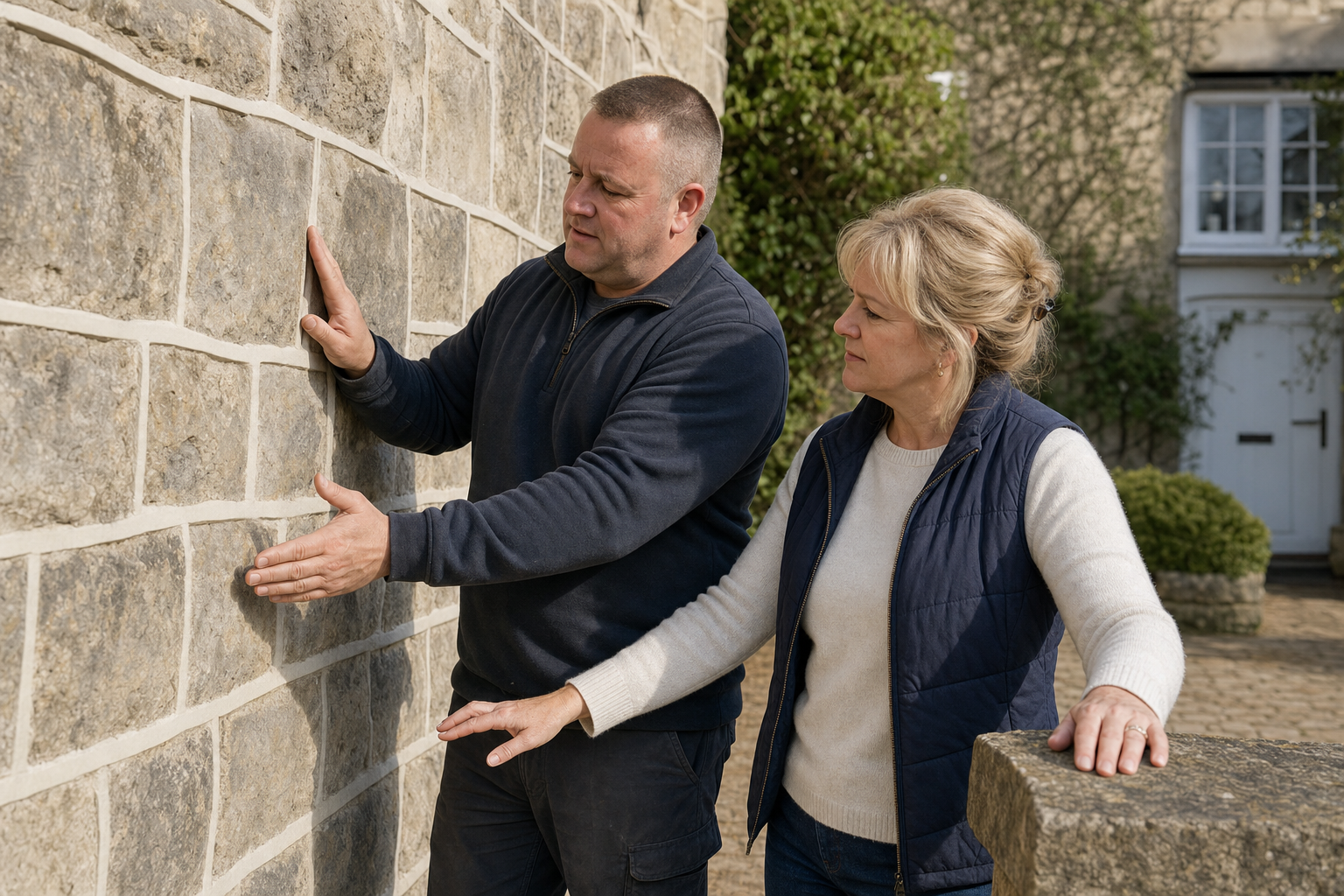
Older stonework often starts to fail at the joints first. Hard cement cracks, traps moisture and can make softer masonry break away around it. We rake out failing, loose or incompatible mortar with care and repoint with lime chosen for the stone, the backing and the wall's exposure. With Paul Clarke Restorations, you get joints that can breathe, cope with slight movement and help the wall dry in a more natural way instead of sealing damp into it.
Work paced for proper curing, not quick cover-ups
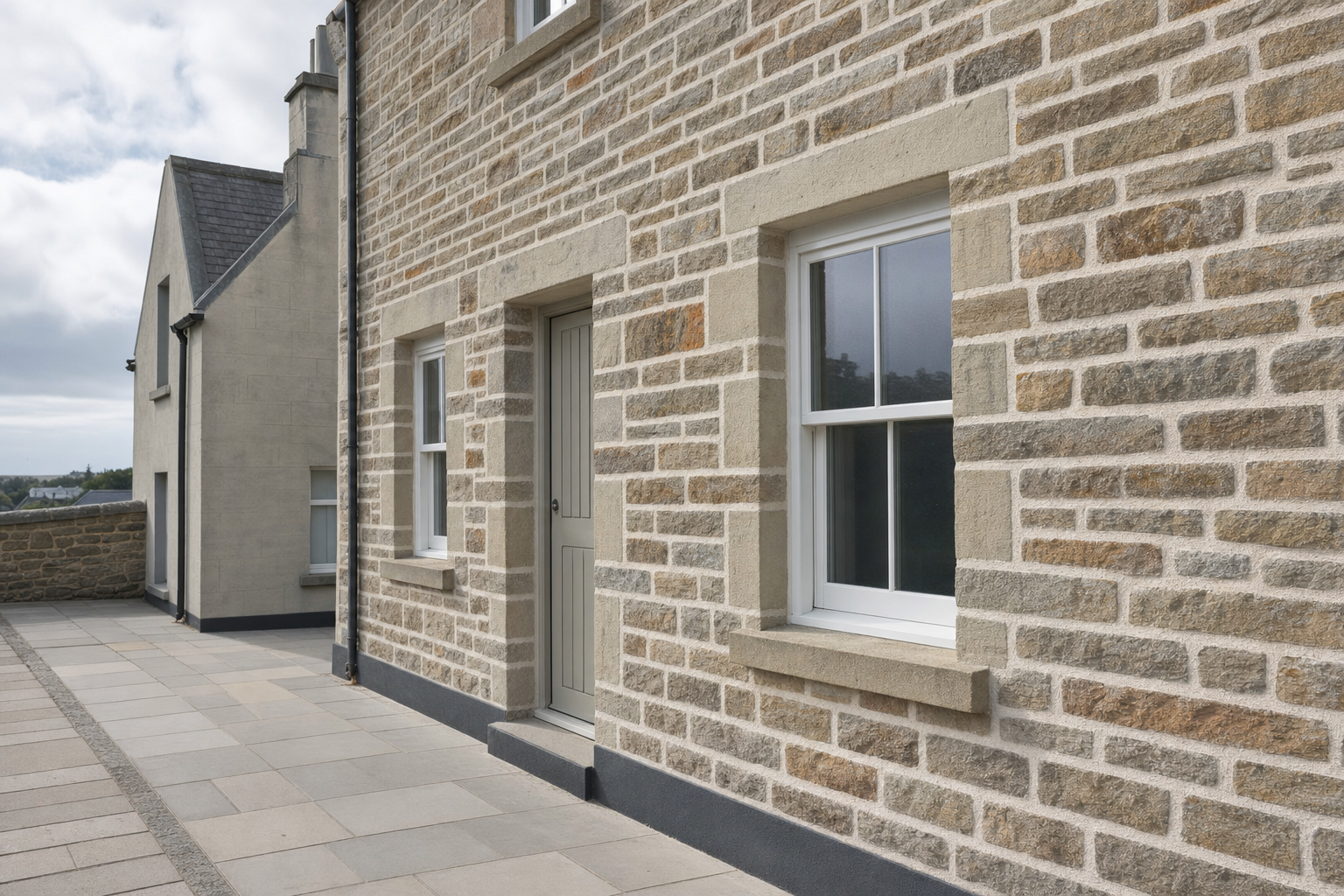
Good repointing is not a race. We judge how much preparation the wall needs, control suction, apply the mortar properly and protect it from sun, wind or sudden rain while it cures. Hot-lime work, localised mortar repairs and joint profiles can all be included where they suit the original finish. By choosing Paul Clarke Restorations, you get a repair paced for durability, not a quick smear that looks neat for a month and starts crumbling by winter.
Frequently asked questions
Why not use hard cement mortar on old stone?
Hard cement can trap moisture in softer masonry and force the stone to take the strain. On older walls, that often leads to blown faces, damp patches and joints failing again around the edges. Lime is usually the more compatible repair because it breathes and moves a little with the wall.
How long does lime repointing take to cure?
Lime cures more slowly than cement, and that is part of why it lasts well on older work. The timing depends on weather, wall condition and exposure. We protect fresh joints from fast drying and heavy rain, and we do not treat a wall as finished until the mortar has had fair conditions to settle.
Can you repair only the worst sections first?
Yes, where the wall allows it. Localised repairs can make sense if failure is limited to certain elevations, joints or exposed areas. We will still look at the wider condition, because patching the worst bit alone is not much use if the next line of joints is ready to follow it.