
Why joined-up wall repairs make sense
One diagnosis first
Cracks, failed joints and bad plaster are checked together before money goes on the wrong fix.
Breathable finishes restored
Lime pointing and plastering help solid walls dry and move in a more natural way.
Structure before surface
We stabilise what matters first, so neat finishing is not wasted on an unsettled wall.
One plan for joints, plaster and movement
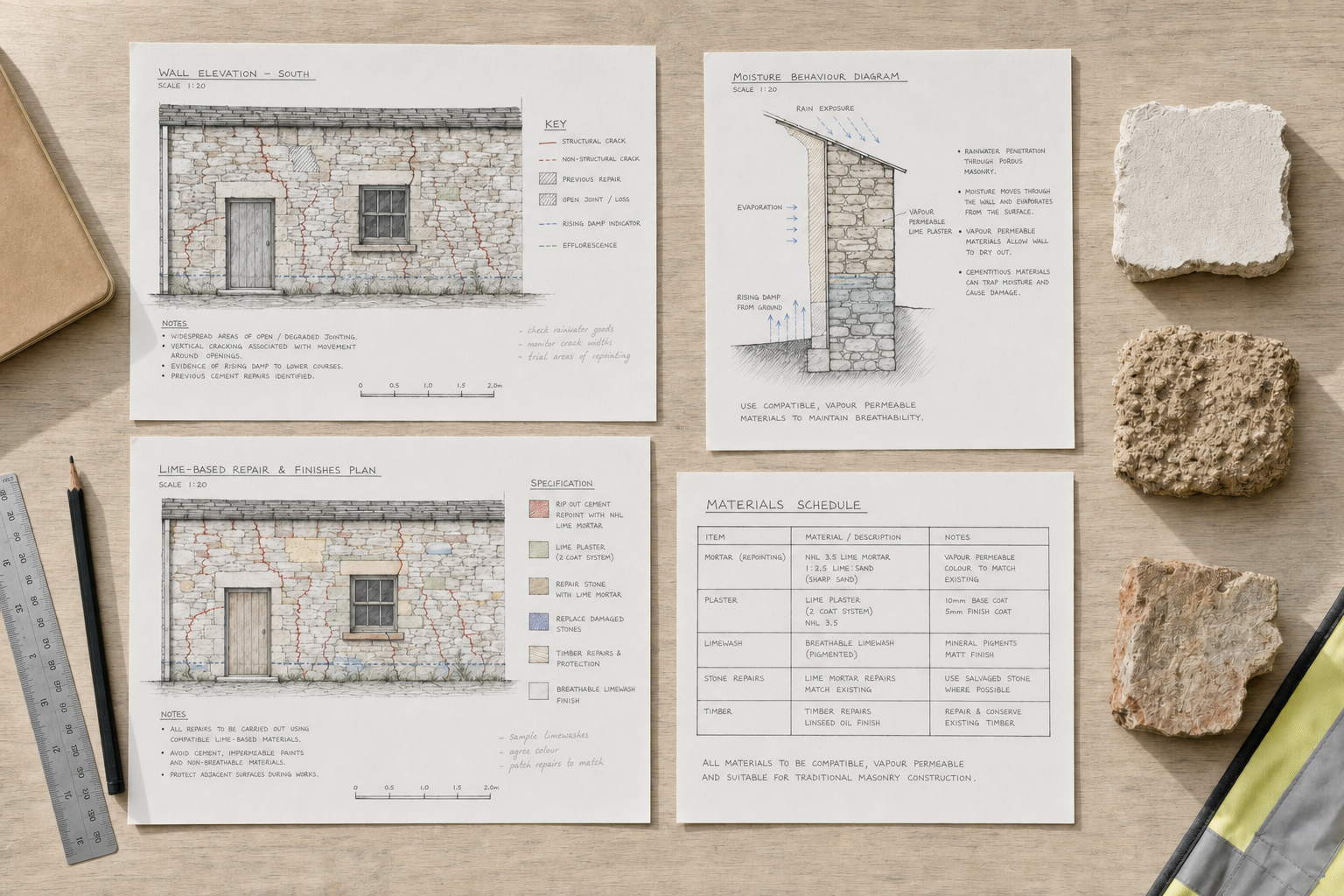
In St Austell, crumbling joints, hard modern plaster and movement cracks often arrive together, which is why patching one symptom rarely settles the whole wall. We assess lime pointing, internal plaster failure and structural movement as linked problems, then plan compatible repairs around the wall's materials, moisture behaviour and condition. With Paul Clarke Restorations, you get a clear view of what can be kept, what needs repair and what needs stabilising before anyone reaches for a bag of filler.
Repairs sequenced for the way old walls behave
Some St Austell properties need local repointing and fresh breathable plaster. Others need crack stitching, temporary support or more involved masonry repair before the finish can go back on. Protection, access and curing time all shape the sequence, especially where older rooms still need to be lived in. By choosing Paul Clarke Restorations, you can deal with the cause of the problem first and the surface finish second, which is usually the cheaper lesson to learn only once.
Frequently asked questions
Can you look at cracks and failed plaster together?
Yes. On older buildings, cracked masonry, hollow plaster and damp patches often feed one another. We look at the wall as a whole so structural movement, joint failure and finish failure are not treated as three separate mysteries.
Can lime pointing and plastering be phased?
They can. Sometimes the outside joints need dealing with first so the wall can begin drying properly before internal plaster repairs start. On other jobs, the sequence depends on access, occupancy and how much of the wall is affected.
What helps before a St Austell site visit?
Photos, the property location, the age or type of building, a brief note on the problem and any access issues are all helpful. Before we visit St Austell, that information often tells us whether the first look can be narrowed to mortar, plaster, structure or all three together.