
What a joined-up conversion avoids
Fewer moving parts
Build and groundwork can be planned together, so the site does not trip over itself later.
Character kept in view
Retained openings, stonework and proportions stay central to the new layout.
Better early decisions
Use, services and approvals are defined before costly changes start stacking up.
Conversions that respect the barn you started with
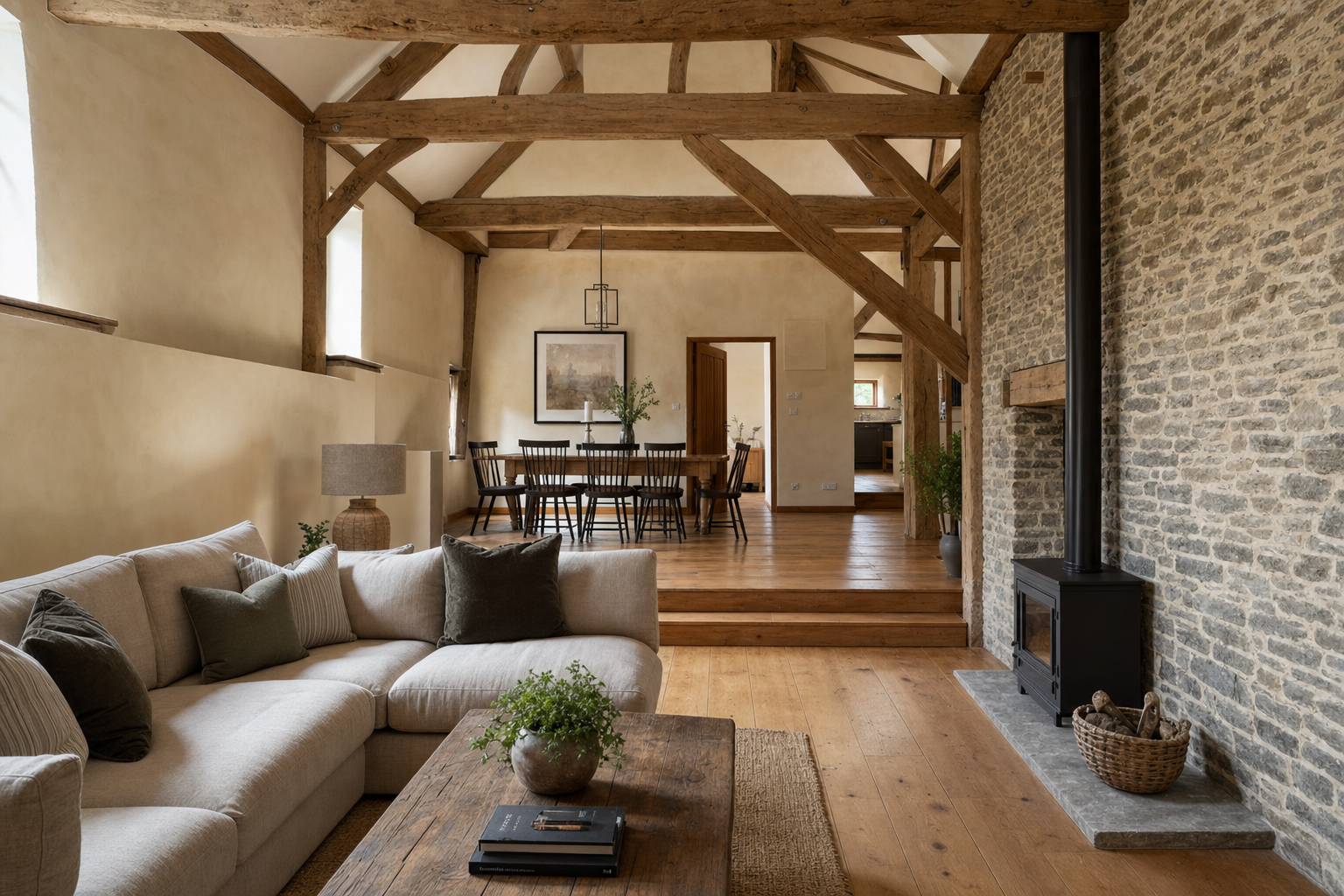
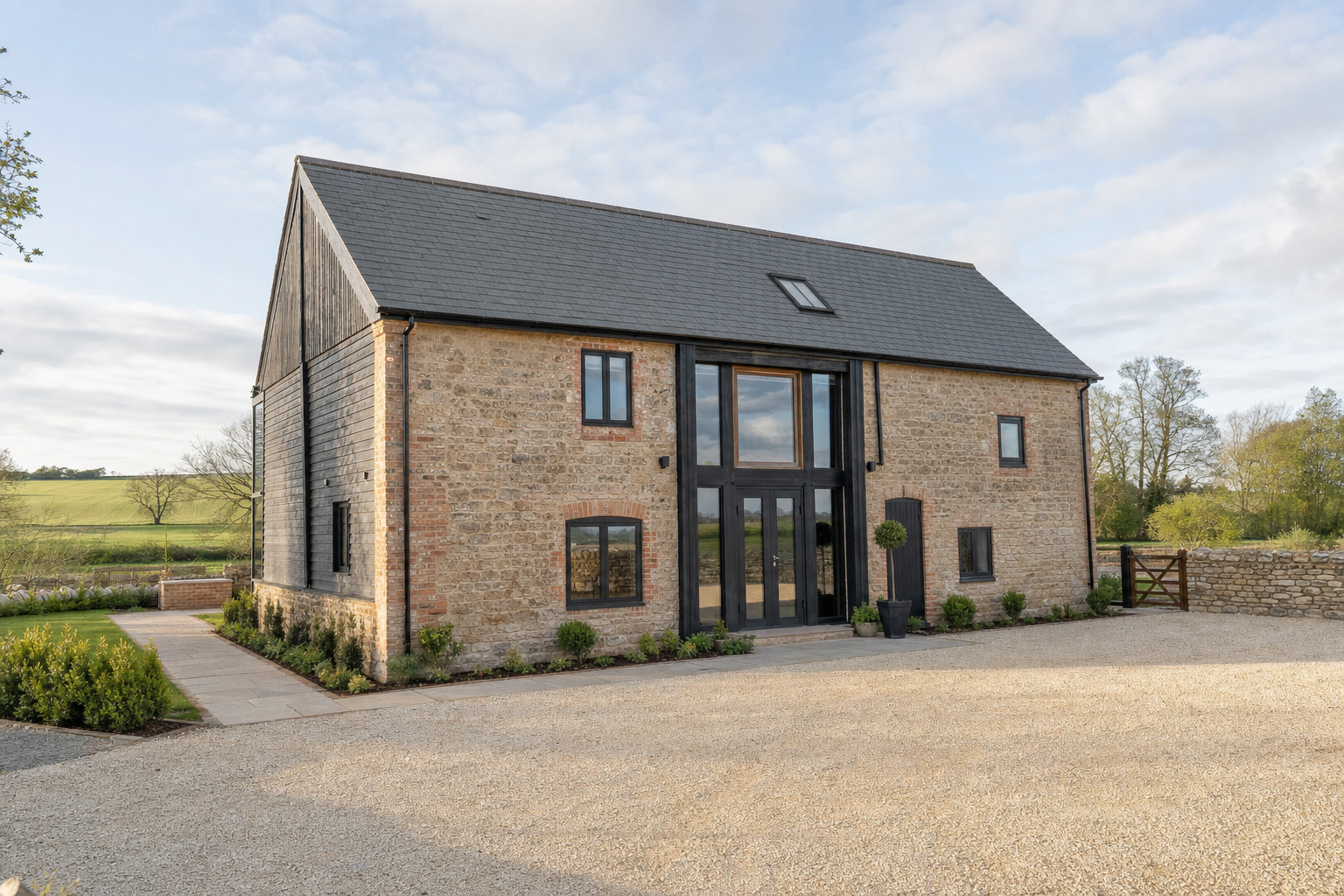
A barn conversion only works when the new use respects the old structure. We start by looking at what the building can safely do now, what needs stabilising and which original features deserve to stay in clear view. Layout changes, insulation, heating and plumbing all need to sit comfortably within the barn's proportions and materials, not flatten the character that made you want to keep it. With Paul Clarke Restorations, the project is treated as a whole build, not a stack of unrelated trades.
Ground, drainage and access planned in from day one
Early decisions save expensive backtracking. We help define the intended use, structural needs, retained features, service routes and any heritage approvals before the busy part begins. We can also fold in tree work, site clearance, drainage, access improvements, surface stability and land shaping, so groundwork does not become somebody else's awkward afterthought. By bringing in Paul Clarke Restorations, you can keep more of the planning, building and site preparation under one roof.
Frequently asked questions
Can a barn conversion include groundwork and drainage?
Yes, and it often makes the project run more smoothly. Access, drainage, site clearance and ground preparation can have a big effect on how the build is sequenced and how usable the finished space becomes. Handling those parts alongside the conversion reduces the need for extra contractors and crossed wires.
How do you protect original features during conversion work?
We start by identifying what gives the barn its character, such as stonework, openings, roof form and internal proportions, then plan the new layout around those elements. Protection, sequencing and the choice of materials all matter, because once original fabric is needlessly lost there is no clever way to put history back.
Do heritage barns need extra coordination?
Often, yes. Listed status, conservation input, structural advice and building control can all shape what is possible and when it should happen. It is better to factor that in early than redesign halfway through. We plan the job around those requirements so the build keeps moving for the right reasons.