
What a durable floor structure needs
Bearings checked first
Joists last better when the wall supports and levels are right before fitting begins.
Damp risks considered
Ventilation and moisture management are built in so new timber is not fed old problems.
Services allowed for
Openings for pipes and cables are planned into the structure instead of carved in later.
New joists planned around the floor as a whole
A tired floor can tell you plenty about what is happening underneath it. Bounce, uneven levels, damp smells and cut-about timbers often point to joists that need more than a patch. We inspect bearing points, spans, levels, surrounding masonry and signs of moisture or decay before planning the new structure. That way the fresh timber is not asked to sit on the same old problem. With Paul Clarke Restorations, floor joist work is tied to the health of the whole floor, not just the bits you can see from above.

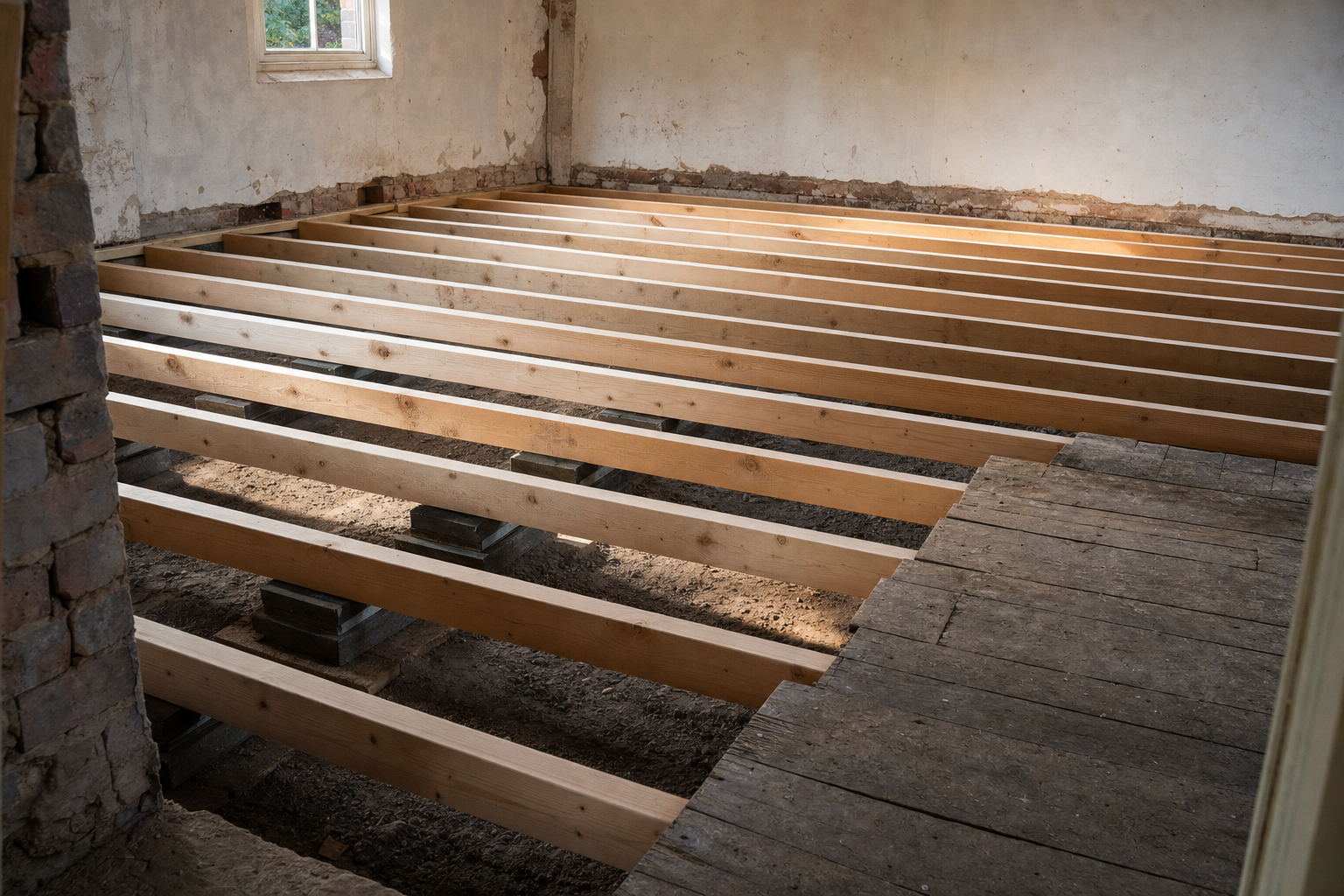
Strength, ventilation and service routes considered
Once the structure is set out properly, we form supports, install the specified joists and coordinate openings for services so later trades are not hacking through new work for the sake of convenience. Ventilation and moisture management matter just as much as strength where older walls are involved. By bringing in Paul Clarke Restorations, you get a floor structure that is planned to last, not simply slotted in and forgotten.
Frequently asked questions
When should old floor joists be replaced?
Replacement is often needed when joists are rotten, undersized, badly notched, uneven or no longer sound at their bearings. Bounce, sagging and damp smells can all be clues, but the structure needs inspecting before jumping to conclusions. Sometimes part of the issue is the support around the joists, not just the timber itself.
Do you check the walls they bear into?
Yes, because a good joist cannot perform well if it is bearing into wet, loose or failing masonry. We inspect levels, supports and surrounding wall condition before planning the new floor structure. That helps stop fresh timber from being built onto the very weakness that caused the trouble in the first place.
Can new joists be fitted during a wider renovation?
Yes, and it is often the best time to do it. Joist work can be coordinated with layout changes, service routes and other structural repairs so the floor is built once and built sensibly. That is far better than fitting new timber and then asking later trades to cut their own ideas through it.